40-Inch Cactus Cat Tree: Hammock, Condo & Scratching Post
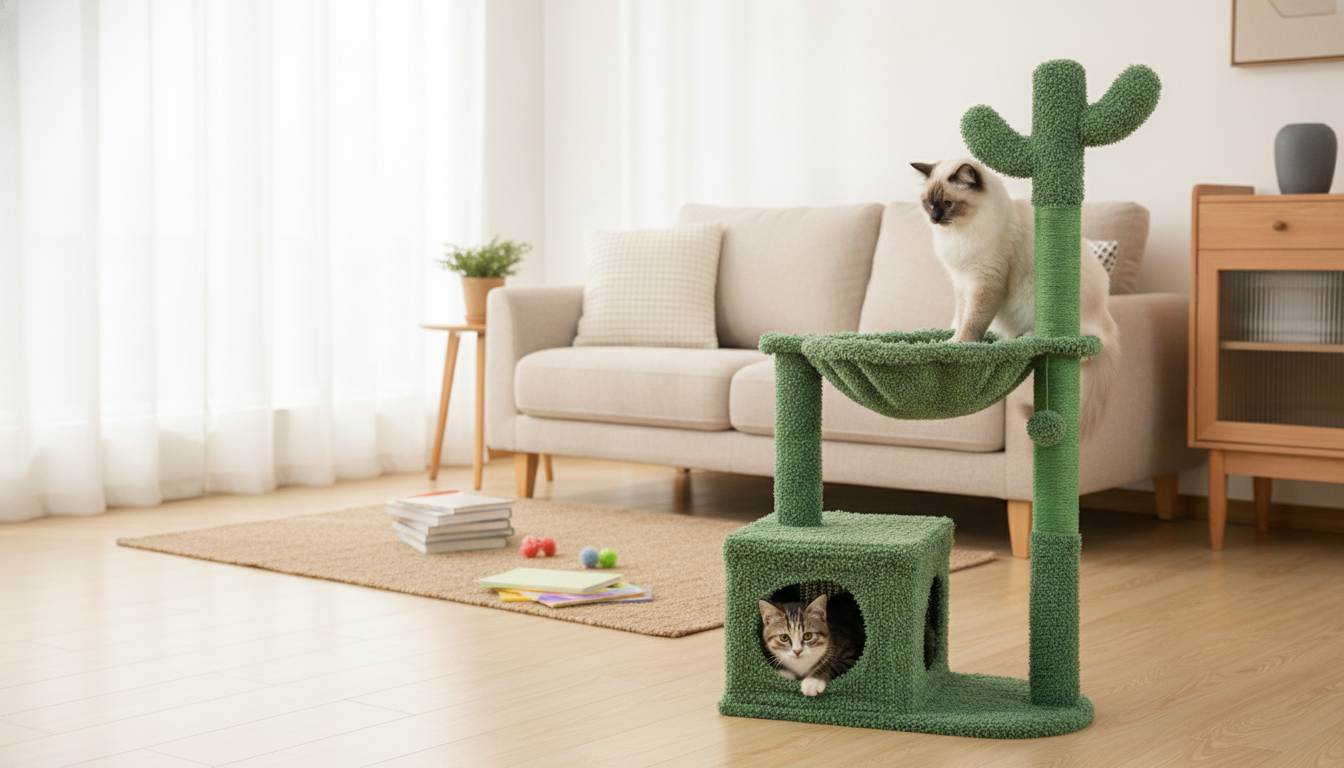
Cactus Cat Tree 40″: Scratching Post, Hammock, Condo, and Batting Ball for Daily Play
A compact cat tower can do more than save furniture—it can create a reliable routine of scratching, climbing, hiding, and lounging. This 40-inch cactus-style cat tree combines a scratch-friendly post with a hammock, enclosed condo, and a hanging batting ball, offering multiple “zones” that support play and rest in small-to-medium spaces. For more guidance, see Catinsider 46.5″ Multi-Level Cat Tree With Condo, Hammock & ….
When a cat has consistent options for movement and downtime, everyday behavior often gets easier to manage—less random scratching, fewer boredom zoomies, and more predictable nap spots. For a quick overview of why structured enrichment matters, the AVMA’s guidance on environmental enrichment for cats is a helpful reference. For further reading, see New 40in Cactus Cat Tree Tower with Hammock, Condo & ….
What makes this cactus-style cat tree different
This cactus-inspired tower focuses on “just enough” height and variety without taking over the room. At 40 inches, it adds meaningful vertical territory for most indoor cats while still fitting comfortably in apartments, offices, and bedrooms.
- Vertical space without visual clutter: The 40-inch height supports climbing and perching, but it won’t dominate a small living area.
- Multi-zone layout for different moods: Active cats can swat the batting ball; cautious cats can decompress in the condo; laid-back loungers can settle into the hammock.
- Decor-forward cactus look: The playful silhouette helps it blend into modern or whimsical interiors instead of looking purely utilitarian.
- Dedicated scratching surface: A predictable scratch zone makes it easier to redirect clawing away from sofas, rugs, and door frames.
- Variety for individual preferences: Some cats love enclosed spaces; others want open perches and the gentle “cradle” feel of a hammock.
Feature overview: scratch, lounge, hide, and hunt
A good cat tree works best when each component has a clear job. This one covers the daily basics—scratching, resting, privacy, and light solo play—without requiring a huge footprint.
- Scratching post: Supports healthy claw maintenance and gives your cat a consistent place to stretch and scratch. For more on why cats scratch and how to guide the behavior, the ASPCA’s overview of scratching behavior in cats is a practical read.
- Hammock: Creates a snug, suspended resting spot—often ideal for cats that like to feel “held” while napping.
- Condo: An enclosed hideaway for privacy, warmth, and reduced stimulation (especially helpful in busy households).
- Batting ball toy: Adds movement-driven play that can cut down on boredom and encourage daily exercise.
- Platforms and transitions: Step-like movement between areas can help build confidence in shy cats when introduced gradually.
Quick feature guide
| Component | Best for | Everyday use tip |
|---|---|---|
| Scratching post | Scratching and stretching | Place near a favorite scratching “hot spot” to encourage switching |
| Hammock | Napping and lounging | Introduce with a soft blanket if the cat prefers familiar textures |
| Condo | Hiding and decompression | Add a small cloth with the cat’s scent to make it feel safe |
| Batting ball | Solo play and enrichment | Rotate other toys weekly so the ball stays interesting |
| 40″ height | Climbing and observation | Set near a window for “cat TV,” but avoid direct heater vents |
Who this 40-inch tower suits best
This style of cat tree tends to work well for households that want multiple functions in one compact piece.
- Indoor cats needing daily stimulation: Helpful when humans are away for work or school and the cat needs predictable enrichment.
- Kittens learning scratching manners: Pair with rewards and gentle redirection to build the habit early.
- Adult cats who like variety: The mix of hammock lounging and condo privacy suits cats that change preferences throughout the day.
- Small homes seeking vertical enrichment: Adds climb-and-perch opportunities without requiring a giant base.
- Multi-cat households: One cat may claim the condo while another prefers the hammock; if competition shows up, add a second scratcher elsewhere to reduce tension.
For extra ideas to keep indoor cats active beyond a tower, the Humane Society’s tips on keeping your cat active indoors can help round out a daily routine.
Placement ideas that help cats use it more
Even a well-designed tree gets ignored if it’s tucked away. Cats generally use towers more when they can observe what’s happening and feel like they’re part of the household “map.”
Assembly, care, and keeping it fresh
Safety notes for daily use
Product snapshot
- Name: Cactus Cat Tree 40″ with Scratching Post, Hammock, Condo & Batting Ball
- Price listed: $78.51 (may change)
- Availability: In stock
- Best for: scratching + lounging + hiding + solo play in one compact tower
Optional companion pick for routine-building
If you like keeping pet care consistent (playtimes, grooming reminders, cleaning schedules), a simple planning resource can help keep the habit going week after week. Consider: Mastering Your Day with Smart Habits and AI: Digital Guide, eBook, and Checklist for Self-Care, Productivity, and Daily Routine Optimization.
FAQ
Will a 40-inch cat tree feel tall enough for an active cat?
For most indoor cats, 40 inches adds meaningful vertical space for climbing, stretching, and perching. Placing it near a window can increase engagement, and pairing it with short daily play sessions helps meet higher energy needs.
How do you get a cat to use the condo and hammock?
Introduce the spaces gradually with treats, a familiar blanket, and (if your cat responds to it) a small amount of catnip. Many cats adopt the condo first for security, while others prefer the open hammock—let your cat choose and reward calm exploration.
How often should the scratching post and toy be checked?
Do a quick check weekly for loose hardware, wobbling, or frayed toy attachments, and address any damage right away. It’s also smart to re-tighten fasteners after the first week, once the tree has seen regular use.









Leave a comment