Used Car Test Drive Checklist: Spot Hidden Problems
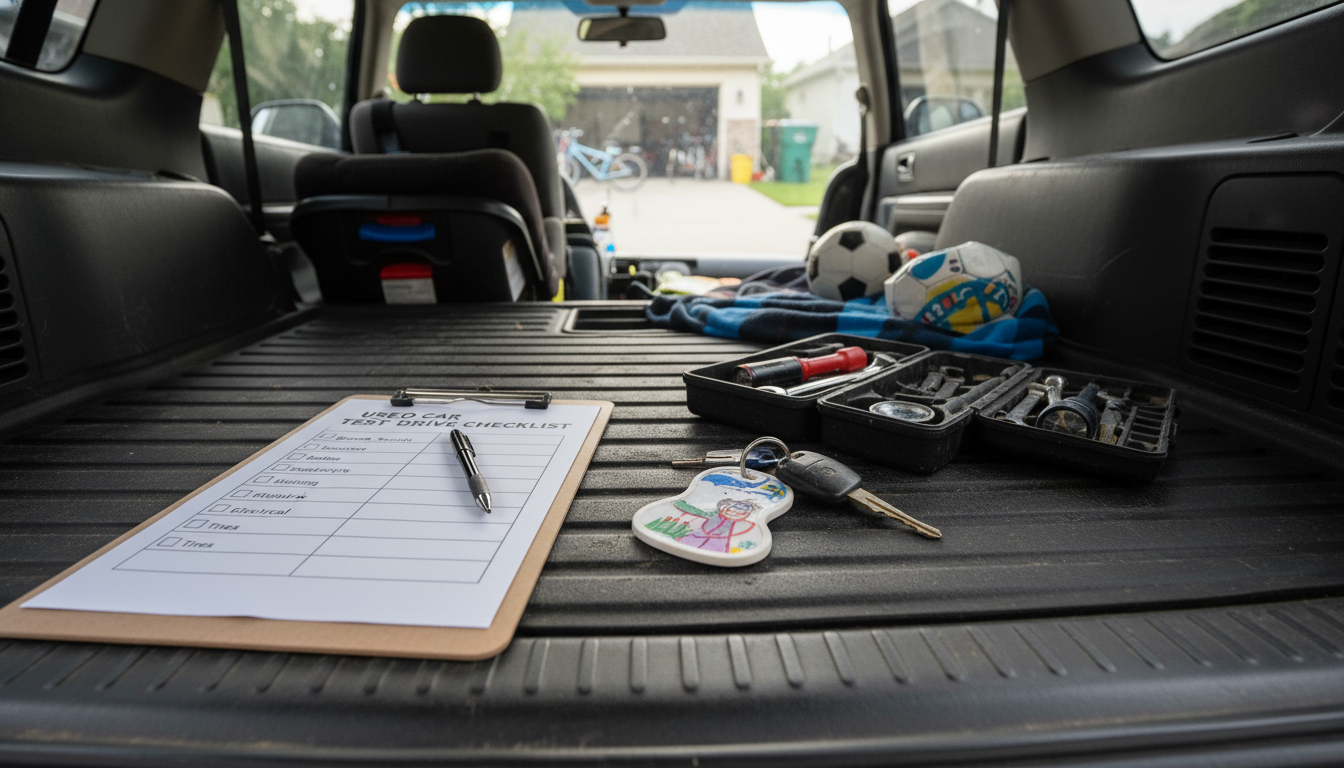
What should you check on a used car during a test drive to avoid hidden problems?
A test drive is your best chance to spot issues that don’t show up in photos or a listing description. Start before the car moves: note how easily it starts, whether the idle is steady, and if any warning lights stay on after a few seconds. With the windows down, listen for ticking, knocking, squealing belts, or hissing that could signal engine, exhaust, or vacuum problems.
On the road, evaluate how the car behaves in different situations. Acceleration should be smooth, with no hesitation, surging, or misfires. For automatic transmissions, shifts should be clean and timely; for manuals, the clutch should engage without slipping or shuddering. Test the brakes in a safe area: the pedal should feel firm, the car should stop straight, and there shouldn’t be grinding, pulsation, or a steering-wheel shake that hints at warped rotors or suspension wear.
Steering and suspension checks are equally important. At various speeds, the car should track straight without pulling. Turn the wheel left and right at low speed and listen for clunks that can indicate worn CV joints, tie rods, or ball joints. Drive over a few bumps and watch for excessive bouncing, rattles, or a “floaty” feel—common signs of tired shocks/struts or loose components.
Also test the basics that are expensive to diagnose later: A/C and heat performance, blower speeds, infotainment, windows, locks, mirrors, wipers, and headlights. Sniff for musty odors (possible water leaks) and check for wind noise or vibration at highway speed. After the drive, look under the car for fresh drips, recheck the engine bay for new smells, and confirm the coolant and oil don’t look contaminated.
For a deeper checklist and what each symptom can mean, see the full guide here: https://ari.best/blog/what-should-you-check-on-a-used-car-during-a-test-drive-to-avoid-hidden-problems/.
FAQ
Should you get a pre-purchase inspection after a test drive?
Yes—an independent pre-purchase inspection can confirm what you felt on the road and uncover hidden leaks, accident repairs, or diagnostic trouble codes. It’s especially smart if the car is out of warranty or the seller can’t provide solid service records.











Leave a comment