Ideal Test Drive Length: 30–45 Minutes to Know for Sure
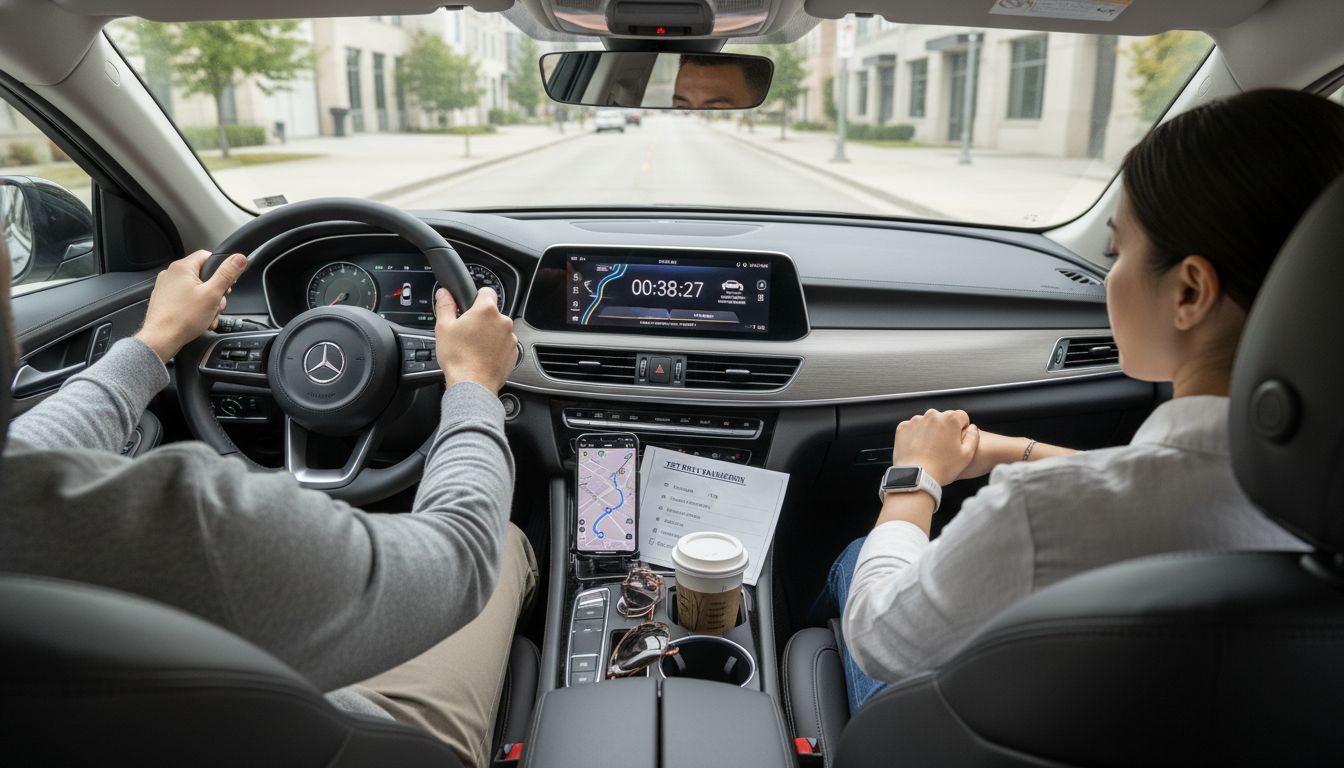
How long should a test drive be to properly evaluate a car?
A solid test drive is usually 30–45 minutes. That’s long enough to get the engine and transmission up to normal operating temperature, try multiple road types, and notice issues that don’t show up in the first few blocks.
Why 30–45 minutes is the sweet spot
In the first 5–10 minutes, almost any car can feel fine. After that, you’re more likely to notice vibrations, brake behavior, shifting quality, wind noise, seat comfort, and how the car responds once everything is warmed up. If you’re evaluating a used car, this extra time also helps uncover intermittent warning lights, cooling fan behavior, or quirks with steering and suspension that appear over bumps.
What to cover during that time
Plan a route that mixes conditions: neighborhood streets (stop signs, tight turns, rough pavement), a stretch of highway (merging power, lane tracking, wind noise), and a few hills if possible (transmission response and braking downhill). Take a moment to test parking: visibility, turning radius, backup camera quality, and how smoothly it creeps in reverse. If the seller allows it, spend a minute with the climate controls, infotainment, and driver-assist features to make sure they work as expected.
When to go longer than 45 minutes
Consider 60 minutes or more if the car is unfamiliar (new model or new-to-you powertrain), you’re comparing multiple vehicles back-to-back, or you suspect a problem that needs time to reproduce (pulling at speed, overheating, brake fade, or a noise that appears only after warming up). For a high-mileage used car, extra time is also valuable for checking how it behaves after several full stops, a few accelerations, and sustained cruising.
A practical next step
Bring a checklist so the drive stays focused and consistent across different cars. For a step-by-step route plan and inspection points before, during, and after the drive, use this guide: Ultimate test drive checklist.
FAQ
What should you check before starting a test drive?
Confirm the tires look evenly worn, all lights and screens turn on, and there are no obvious fluid leaks or strong odors. Adjust your seat, mirrors, and steering wheel first so you can accurately judge comfort, visibility, and control.












Leave a comment