Cute 3D Animal Cable Protector for iPhone Charger Ends
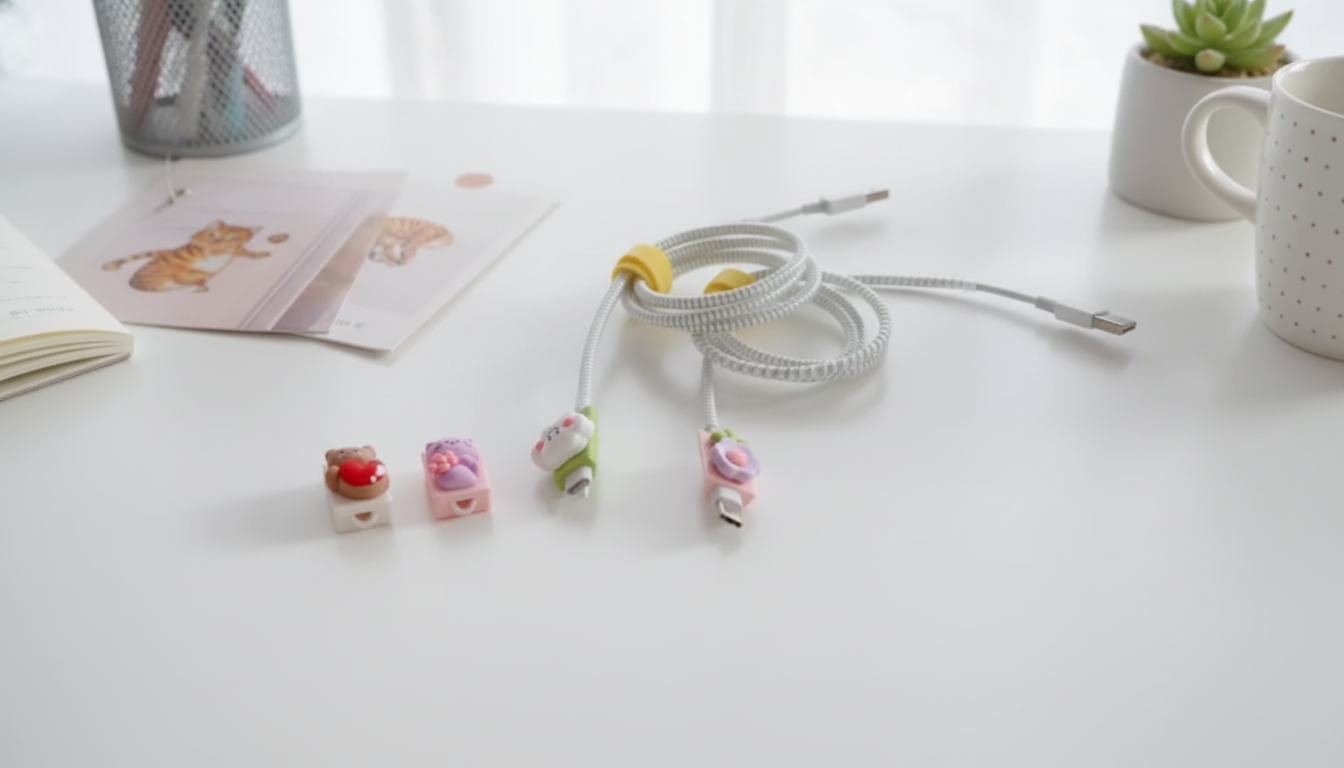
3D Cartoon Animal Cable Protector: A Cute Fix for Frayed iPhone Charging Cables
Charging cables rarely “just stop working” out of nowhere. Most fail after weeks of tiny bends and tugs in the same spot—right where the flexible cable meets the hard connector housing. A 3D cartoon animal cable protector adds a soft, flexible sleeve around that stress zone to help reduce sharp kinks, while doubling as a playful bedside or desk accessory and a simple USB cable organizer.
What a cable protector does (and why cables usually break)
The weakest point on most charging cords is the connector junction. Every time a phone is picked up while charging, stuffed into a bag, or used in a car mount, the cable end gets bent at an aggressive angle. Over time, those repeated bends can fatigue the internal conductors or crack the outer jacket.
- Targets the most common failure zone: repeated bending right where the cable meets the connector housing.
- Adds a supportive sleeve: helps spread strain over a larger section of the cable instead of concentrating it at one sharp crease.
- Makes cords easier to spot: helpful when several similar white or black cables are in the same area.
- Best for prevention or early intervention: if insulation is badly torn or wiring is exposed, replace the cable for safety.
For general charging and accessory reliability guidance, Apple’s accessory notes can be a useful reference point: Apple Support — If your Lightning accessory isn’t supported.
Highlights of the 3D cartoon animal design
There are plenty of plain strain-relief options, but the “cute factor” is surprisingly practical. When a cable end is more visible and easier to grab, it’s less likely to be yanked off a nightstand or tugged by the cord itself.
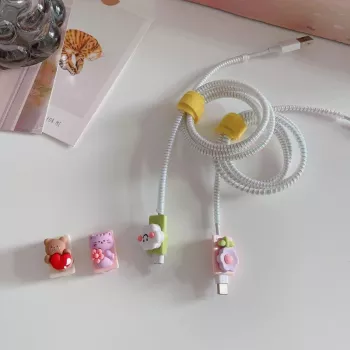
- Easy-to-see 3D animal shape: helps the cable end stand out, reducing accidental yanks and drops.
- Simple organizer effect: gives the cord a defined “end” that’s easier to grab, route, and identify.
- Lightweight and portable: fits into home setups, backpacks, cars, and office charging stations.
- Budget-friendly longevity boost: a small add-on that can help extend the life of frequently used cables.
For readers curious about why USB designs and connector standards vary (and why cable quality matters), the USB Implementers Forum (USB-IF) provides official resources and specification overviews.
At-a-glance product details
If the goal is to reduce sharp bends near the plug and make cords easier to keep track of, the 3D Cartoon Animal Cable Protector for iPhone Charger and USB Cable Organizer is a straightforward, low-cost upgrade for everyday charging spots.
| Detail | Info |
|---|---|
| Product name | 3D Cartoon Animal Cable Protector for iPhone Charger and USB Cable Organizer |
| Price | 3.51 USD |
| Availability | In stock |
| Typical use | Protects cable stress points; helps organize and identify cords |
| Product page | View product |
Compatibility and where it fits best
This style of protector is designed for common phone charging and USB cables—especially cables that bend frequently at the connector-to-cable junction. It’s most useful where cords are handled daily and routinely get pulled at an angle.
- Best everyday locations: bedside chargers, power banks, car chargers, and work desks.
- Helpful in multi-device homes: makes it easier to tell which cable belongs to which person or device.
- Fit considerations: unusually thick cables or oversized connector housings may feel tighter; confirm fit before forcing it.
As a general safety reminder, charging accessories and cords should be kept in good condition. For a broad overview of safety and certification concepts (especially relevant to anything that plugs into power), UL Solutions provides background here: UL Solutions — Product safety and certification overview.
How to install without stressing the cable
Installation should feel gentle. If a protector requires aggressive pushing or twisting, pause and reassess the fit—no accessory is worth damaging a cable that’s still in good shape.
- Unplug the cable from both the power source and the device before installing.
- Start from the connector end and slide the protector into position slowly, avoiding sharp twists.
- Seat it so it covers the area that bends most during normal use (often the first 1–2 inches from the connector).
- After installing, bend-test gently: the cable should curve smoothly without a hard kink at the edge of the protector.
Care, cleaning, and durability tips
Cable protectors are low-maintenance, but a few habits keep both the protector and cable looking better for longer.
Choosing the right cable protection style for different routines
Small gift idea and desk-upgrade use cases
Recommended add-ons (in stock)
- 3D Cartoon Animal Cable Protector for iPhone Charger and USB Cable Organizer (3.51 USD)
- Mastering Your Day with Smart Habits and AI: Digital Guide, eBook, and Checklist (12.99 USD)
- Using AI for Research & Data Summaries — Digital Download (5.99 USD)
FAQ
Will a cable protector fix a cable that’s already broken or frayed?
It can help stabilize minor wear and reduce further bending, but it won’t repair broken internal wires. If charging is intermittent, insulation is split, or any wiring is exposed, the safest option is replacing the cable.
Does it work with iPhone charging cables and other USB cables?
It’s designed for many common charging and USB cables, including typical iPhone charging leads. Very thick cables or oversized connector housings may fit more tightly, so it’s best to confirm sizing before forcing it on.
How do you keep cables from bending and cracking near the plug?
Unplug by gripping the connector head, not the cord, and avoid tight wrapping that creates hard bends. Add a protector at the connector end, route cables with gentle curves, and minimize side-pull while the device is charging.









Leave a comment