Foldable Indoor Dog Cage with Toilet Tray: Home Setup Guide
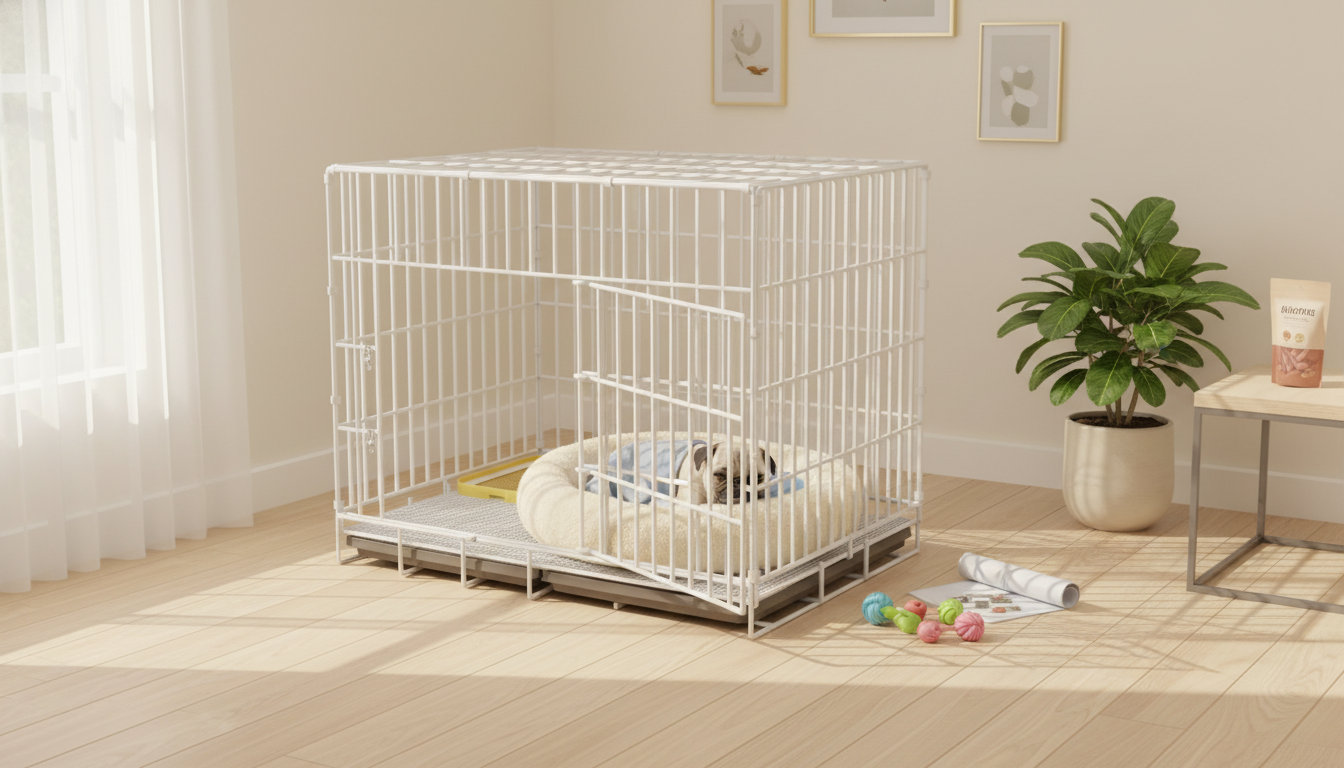
Foldable Indoor Dog Cage with Toilet Tray for Small and Medium Pets
A foldable indoor cage with a built-in toilet tray can simplify potty routines while giving small and medium pets a secure, comfortable space. This setup is especially helpful when outdoor breaks aren’t always convenient—like during apartment living, nighttime schedules, bad weather, or short periods when close supervision is needed. The goal is straightforward: keep the rest area inviting, keep the toilet zone consistent, and make cleanup easy so the routine stays sustainable day after day. For more guidance, see Practical Pomeranian Potty Training Tips.
What This Style of Indoor Cage Helps With
- Creates a defined resting area that can reduce roaming and indoor accidents during training.
- Supports a cleaner routine by separating sleep space from the toilet tray area when used consistently.
- Offers a convenient setup for apartments, travel to family homes, or rooms where a permanent crate is impractical.
- Helps manage supervision during house-training, post-grooming drying time, or short quiet breaks.
- Provides a predictable “safe zone” for pets that settle better with boundaries.
For a broader foundation on crate routines and positive training, see the guidance from American Kennel Club (AKC) and Humane World for Animals. For further reading, see Choosing the Right Playpen for Your Dog – American Kennel Club.
Key Features to Prioritize
- Fold-and-carry design: Look for a frame that collapses quickly and locks firmly when opened, so it doesn’t wobble or shift.
- Toilet tray design: A smooth surface with a raised edge helps contain messes. A slide-out or easy lift-out tray keeps cleanup from becoming a chore.
- Ventilation and visibility: Ample airflow and clear sightlines can reduce stress and help prevent overheating.
- Door access: A wide opening makes it easier to guide a pet in calmly. Check that latches feel secure and aren’t easy to nose open.
- Floor comfort: The rest area should fit a thin mat while keeping the toilet zone accessible, so the pet doesn’t treat bedding as a potty surface.
- Materials and finish: Surfaces that wipe clean and resist odor absorption make it easier to stay consistent.
Quick Comparison Checklist
Use this checklist to confirm the cage matches the pet’s daily routine (sleep, play breaks, potty timing). If the cage is used for training, consistency matters more than complexity: a simple, repeatable setup beats frequent rearranging.
Indoor Foldable Cage + Toilet Tray Checklist
| Item to Check | Why It Matters | What to Look For |
|---|---|---|
| Foldability | Makes storage and transport easier | Collapses in minutes; stable when opened |
| Tray removal | Faster cleaning and less odor | Slide-out or lift-out tray with smooth corners |
| Latch security | Prevents escapes and pinched noses | Firm latch that clicks closed; no sharp edges |
| Ventilation | Comfort and safety | Multiple airflow sides; no blocked panels |
| Space for pet size | Prevents stress and accidents | Room to stand, turn, and lie down comfortably |
| Cleaning access | Keeps routine manageable | Wide door opening; easy wipe surfaces |
Setup and Placement at Home
- Choose a calm location: Place the cage away from direct sun, heating vents, and heavy foot traffic so it doesn’t feel like a “hallway stop.”
- Stabilize on slick floors: Use a non-slip mat underneath if you have tile or hardwood to prevent shifting when the pet moves.
- Plan water placement: If the pet will be inside beyond short periods, keep water available—but position it so spills won’t soak the resting area and encourage damp odors.
- Avoid isolation: Pets often settle better when they can see household activity without being in the middle of it.
- Keep the layout consistent: The sleeping area should stay inviting, and the toilet tray should stay in the same position to reduce confusion.
Potty Training and Habit Building with a Toilet Tray
Cleaning and Odor Control Routine
Comfort and Safety Notes
Product Spotlight: Foldable Indoor Dog Cage with Toilet Tray
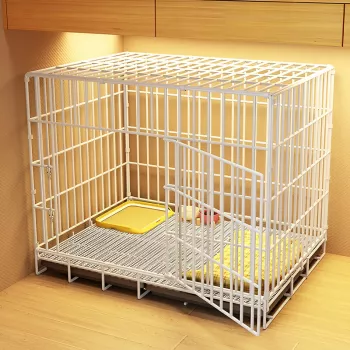
If you’re looking for a compact indoor setup that supports routine-based potty habits, the Foldable Indoor Dog Cage with Toilet Tray for Small and Medium Pets is designed around an integrated toilet tray concept. The foldable structure makes it easier to store between uses and move room to room, which can be useful in apartments, shared households, or when you want the cage near you during work hours.
For best results, pair the cage with a consistent schedule (especially after sleep, meals, and play) and keep the tray cleaning routine simple enough to maintain daily. If you like having a repeatable routine checklist to stay consistent, the digital guide Mastering Your Day with Smart Habits and AI can be adapted as a tracker for potty timing, cleaning reminders, and training notes.
FAQ
How long does it take for a pet to learn to use the toilet tray consistently?
Many pets start to understand the routine in a few days, but consistent tray use often takes a couple of weeks, depending on age and prior training. A steady schedule, close supervision, and immediate rewards typically speed up progress.
How often should the toilet tray be cleaned?
Remove waste as soon as you notice it, and wash the tray regularly—often daily or as needed based on use. If there’s an accident outside the tray, an enzymatic cleaner helps reduce lingering odor that can trigger repeat marking.
Is a foldable indoor cage safe for overnight use?
It can be safe overnight when the cage is the right size, stable, and well-ventilated, and when the pet is already comfortable settling inside. Keep the space cool and calm, and consider water access based on your pet’s needs and veterinary guidance.










Leave a comment