Wooden Cat Tower with Litter Box, Hammock & Scratchers
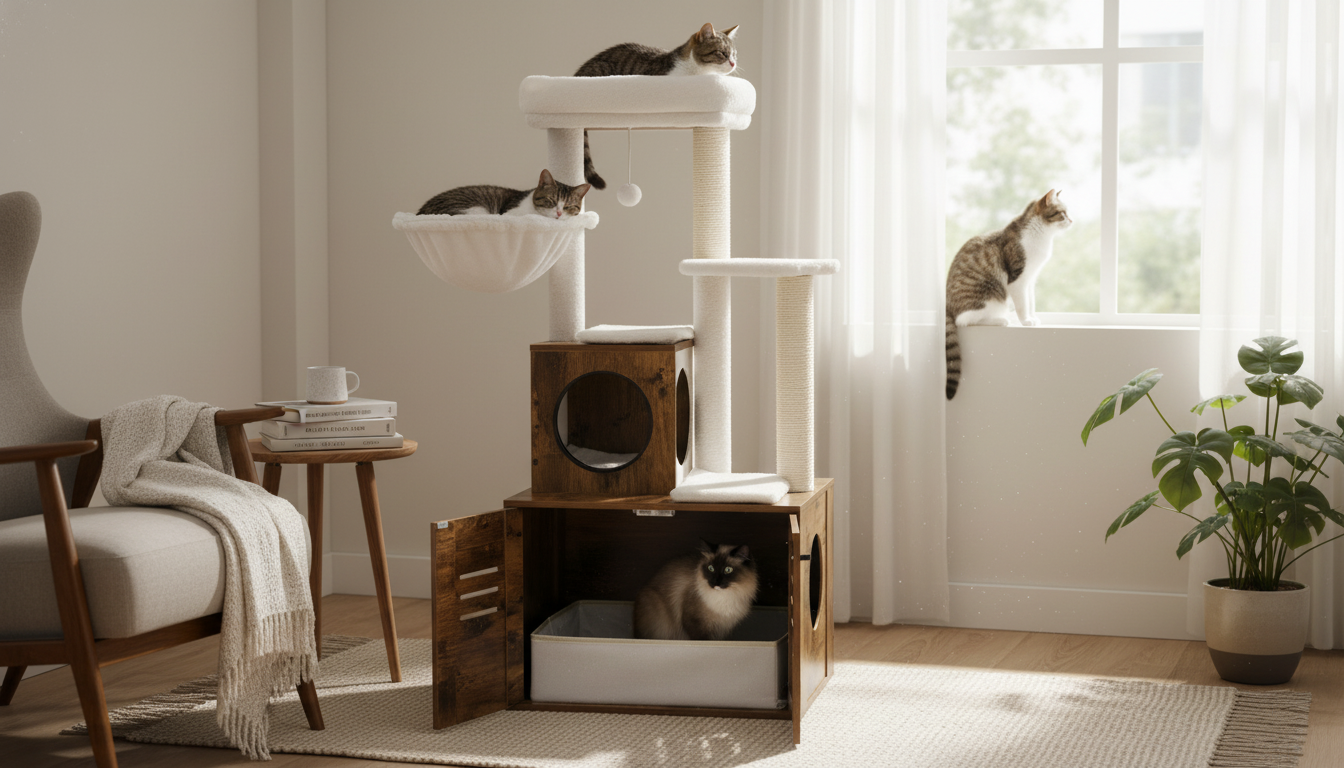
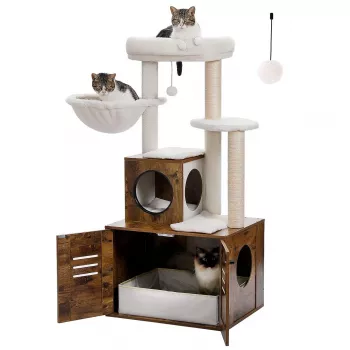
Multi-Level Wooden Cat Tower with Litter Box, Hammock & Scratching Posts
A multi-level cat tower that combines climbing space, a cozy hammock, dedicated scratching areas, and a built-in spot for the litter box can make a home feel calmer and cleaner—especially in small spaces or multi-cat households. This style of wooden tower brings key daily cat needs into one vertical “cat zone,” helping reduce scattered litter supplies and encouraging healthy behaviors like climbing, perching, and scratching in appropriate places.
What This Cat Tower Adds to a Home
A multi-function tower is more than a cat tree with extra parts. It can change how cats move through a room and how tidy the cat setup feels day to day.
- Vertical territory that encourages climbing and perching, helping cats feel secure without taking up extra floor space.
- A more discreet litter box area that can reduce visual clutter and help keep litter contained in one zone.
- A hammock-style resting spot that supports lounging and napping off the floor.
- Scratching posts that give cats an appropriate outlet and can help protect furniture.
Key Features to Look For in a Multi-Function Wooden Tower
Because this setup combines several “must-haves,” the best options prioritize stability, easy access, and surfaces that stand up to daily wear.
- Stable base and strong frame to prevent wobbling when a cat jumps between levels.
- Multiple platforms at different heights so cats can choose a preferred perch and route up/down.
- A litter box compartment with enough clearance for the box used at home and easy access for scooping.
- Scratch-friendly post wrap (often sisal-style) positioned where cats naturally stretch and scratch.
- A supportive hammock that’s easy to detach or wipe down when needed.
Quick Fit Check Before Buying
| What to check | Why it matters | Simple way to confirm at home |
|---|---|---|
| Litter box space | Cats avoid boxes that feel cramped; cleaning becomes harder | Measure the litter box length/width/height and compare to the tower’s compartment clearance |
| Overall stability | Prevents tipping during running starts and jumps | Look for a wide base; place on a flat surface and consider using wall placement for added security |
| Scratch post placement | Cats scratch where they pass and stretch | Choose a tower with posts near entry points and along climbing routes |
| Resting variety | Different cats prefer different sleep styles | Ensure at least one hammock/bed plus a platform large enough to curl up on |
| Cleaning access | Easier upkeep encourages consistent use | Confirm doors/openings allow scooping and wiping without moving the whole tower |
Who This Setup Works Best For
- Apartment or small-home layouts where combining a litter box area with vertical space saves room.
- Cats that enjoy heights, window watching, and surveying a room from above.
- Households that want the litter box less visible while keeping access easy for the cat.
- Cats that scratch furniture—adding an appealing scratch zone near common pathways can help redirect behavior.
If litter box avoidance or stress has been an issue, it’s worth reviewing recognized behavior guidance before changing the setup. The ASPCA’s litter box resources are a helpful reference for factors like cleanliness, privacy, and medical concerns. For scratching behavior and why placement matters, International Cat Care offers practical insights.
Where to Place It for Daily Use
Placement can make or break whether the litter compartment gets used consistently and whether the tower becomes a favorite hangout.
- Choose a quiet but accessible area so the litter compartment feels safe and predictable.
- Keep at least one side open for approach/exit to avoid a “dead-end” feeling around the litter area.
- Place near a normal hangout (like a living room corner) to increase scratching and lounging use.
- Avoid noisy appliances or tight hallways that can create litter box stress.
- Near a window is a bonus if it makes the upper levels more engaging and reduces boredom.
Comfort, Training, and Smooth Transitions
Even confident cats can be cautious about a new bathroom location. A slow, predictable transition keeps the setup positive.
- Introduce gradually: let the cat explore the tower first, then transition the litter box into the compartment if needed.
- Use positive cues: a sprinkle of catnip on scratching posts (if the cat responds to catnip) and treats on lower platforms can help create a “good things happen here” association.
- Keep the routine consistent: same litter type, same cleaning schedule, and the same familiar box when possible.
- If hesitation happens: keep the compartment opening fully unobstructed and add gentle ambient light nearby so it doesn’t feel like a dark hideout.
- Multi-cat households: ensure cats can pass without being cornered. If tension appears, add separate resources (another litter box or resting spot) rather than forcing sharing.
Cleaning and Maintenance Tips
Product Snapshot and What to Expect
- Multi-Level Wooden Cat Tower with Litter Box, Hammock & Scratching Posts — Price: $175.51 (USD; may vary with promotions and availability)
- Bohemian Style 24-Piece Ceramic Dinnerware Set for 6 – Plates & Bowls
- Mastering Your Day with Smart Habits and AI: Digital Guide, eBook, and Checklist
FAQ
Will cats actually use a litter box inside a tower enclosure?
Most cats can adapt if the space is roomy, easy to enter and exit, and kept very clean. Transition slowly by letting your cat explore first, then move the existing box into the compartment while keeping litter type and routine unchanged.
How can scratching posts on a tower reduce furniture scratching?
Posts work best when they’re placed along common routes and are tall enough for a full stretch, with a texture your cat likes. Encourage use with treats or catnip (if your cat responds) and make the old scratch target less appealing while the new habit forms.
How often should the hammock and platforms be cleaned?
Remove hair weekly (more often for heavy shedders) and spot-clean whenever you notice buildup. Pay extra attention to areas near the litter compartment and follow the care guidance for any removable fabric pieces.











Leave a comment