12.7mm Static Rope Guide: 32kN Specs & Length Picks

12.7mm Static Climbing Rope: What It’s Built to Do
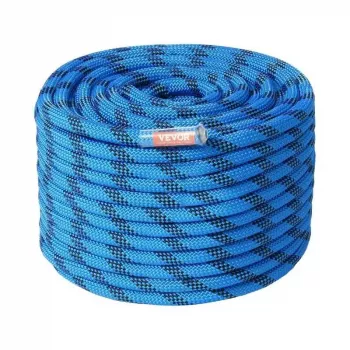
A 12.7mm static rope is designed for control, stability, and low stretch under load. That makes it a strong choice for fixed-line rappels, hauling systems, and work-positioning style setups where “bounce” wastes energy and complicates movement. With a 32kN strength rating as a headline spec, this rope class is commonly chosen for heavy-duty outdoor utility and technical rigging—provided the entire system (anchors, connectors, devices, and knots) is compatible and appropriately rated.
If you’re selecting a length, the right answer is rarely just the vertical distance. Real-world setups often require extra rope for anchor building, edge transitions, redirects, and tie-offs—especially when the line isn’t perfectly straight.
What a 12.7mm Static Rope Is Best For
- Fixed-line rappels and controlled descents: Low stretch helps keep your descent consistent, especially on long lines where elongation can feel “spongy.”
- Hauling and mechanical advantage systems: Less elongation means less effort lost to rope stretch and more efficient progress when lifting packs, coolers, or equipment.
- Ascending fixed lines: Static behavior improves efficiency with ascenders, making upward movement feel more direct and predictable.
- Work positioning and stable rigging: When stability matters more than energy absorption, a thicker static line can feel steady and confidence-inspiring.
- Outdoor utility tasks: Handlines, temporary lines for moving gear, and certain camp rigging tasks (only when appropriate and away from sharp/abrasive edges).
- Not for lead climbing: Lead climbing requires a dynamic rope that’s designed to absorb fall energy through stretch; a static rope transmits forces more directly.
Key Specs That Matter: Diameter, Strength, Construction, and Handling
Diameter (12.7mm)
A 12.7mm line typically offers a robust feel and a more substantial grip than thinner ropes. It can also provide improved abrasion tolerance in rough environments. The tradeoff is bulk and weight: larger diameter means more rope volume to carry, coil, and manage at the anchor.
Strength rating (32kN) and why “system strength” matters
32kN is a force rating (kilonewtons). It’s useful as a baseline, but it doesn’t automatically describe how strong your setup is in practice. Knots can reduce rope strength, tight bends over small radii can concentrate force, and hardware is only as strong as its orientation and rating. The workable strength of a life-safety system is limited by the weakest component and the least favorable loading scenario.
Static vs. dynamic behavior
Static ropes stretch less under normal loads, improving control and efficiency for hauling and ascending. The downside is higher impact forces if the rope is shock-loaded. In other words: keep fall factors low, manage slack carefully, and avoid scenarios where someone can drop onto a static line.
Device compatibility (descenders, ascenders, grabs)
Before committing to a 12.7mm rope, confirm that your belay/rappel device, progress-capture device, rope grab, and ascenders are rated for the rope’s diameter range (commonly 12–13mm for thick static ropes). Oversized rope in an undersized device can lead to poor braking, glazing, or inability to operate smoothly.
Quick selection guide for common setups
| Scenario | Why static rope helps | Notes to check before use |
|---|---|---|
| Rappelling on a fixed line | Less bounce and consistent control | Confirm descender rating range for 12.7mm; consider a backed-up friction hitch or rated autoblock where appropriate |
| Hauling a pack or gear | Less energy lost to rope stretch | Use rated pulleys/carabiners; protect rope over edges and lip transitions |
| Ascending a fixed line | Efficient progress with ascenders | Ascenders must be rated for rope diameter; avoid shock loading and manage slack |
| Work positioning / restraint | Stable positioning and reduced movement | Follow applicable work-at-height standards; use rated connectors, anchors, and backups as required |
Choosing the Right Length: 125ft vs 150ft vs 200ft
125ft
A solid option for shorter drops, training lines, and compact carry. It’s easier to coil, faster to deploy, and less prone to becoming a tangled “rope nest” when space is tight.
150ft
A versatile middle ground that works well for many outdoor descents and utility rigging needs. If you’re unsure and your typical routes aren’t especially long, this length often balances flexibility with manageability.
200ft
Best when you expect longer routes, more complex anchors, or terrain that forces indirect rigging (extensions, redirects, or extra distance to reach a solid anchor). The extra length also gives more room for tying off, building redundancy, and keeping knot clusters away from edges.
Add margin for anchors and real-world geometry
Safe System Basics: Anchors, Hardware Ratings, and Shock Loading
For deeper technical references, consult UIAA Safety Standards, manufacturer guidance such as Petzl technical resources, and relevant work/response standards like NFPA (including NFPA 1983 where applicable).
Knots, Terminations, and Practical Setup Checks
Care, Storage, and Retirement Guidelines
Product Picks (In Stock)
- 12.7mm Static Climbing Rope – 125/150/200ft Outdoor Rope with 32kN Strength
- Women’s Suede Leather Lace-Up Loafers
FAQ
Can a static rope be used for lead climbing?
No—lead climbing generally requires a dynamic rope designed to absorb fall energy through stretch. Static ropes are intended for low-stretch applications like fixed lines, rappelling, hauling, and work positioning where shock loads are minimized.
What does 32kN strength mean in real use?
32kN is a force rating (about 7,200 lbf), but your real-world system strength is usually lower due to knots, bends, device friction, and hardware limits. Anchors, connectors, and compatibility with your devices often determine the practical maximum more than the rope’s headline number.
How do I choose between 125ft, 150ft, and 200ft?
Start with your maximum expected route length and add extra for anchors, knots, and any redirects or edge transitions. Choose 125ft for compact setups, 150ft for an all-around balance, and 200ft when you want maximum flexibility for longer or more complex rigging.










Leave a comment