39mm Diver GMT: Enamel Dial, Ceramic Bezel Guide
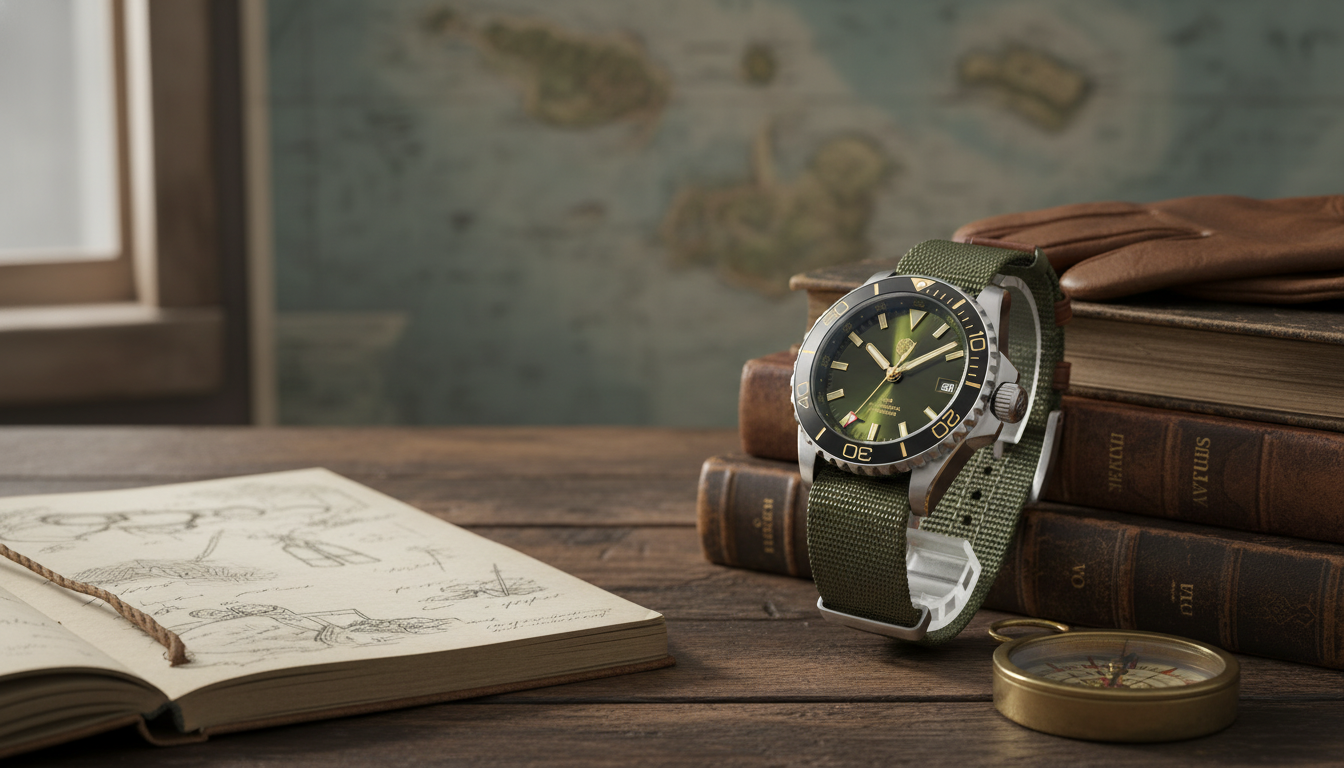
39mm Diver GMT with Enamel Dial and Ceramic Bezel
A compact diver with a travel-ready GMT complication can be an ideal daily watch: sporty enough for weekends, sharp enough for work, and genuinely useful when schedules span time zones. This 39mm diver GMT leans into that versatility with a glossy enamel-style dial for crisp legibility and a scratch-resistant ceramic bezel insert designed to stay looking fresh. Below is a practical breakdown of what those features do in real life, how to use the GMT hand and bezel together, and what to verify before buying.
Quick Look: What Stands Out
- 39mm case size balances presence and comfort for many wrist sizes, especially for anyone who finds modern divers oversized.
- GMT function adds an always-visible second time zone for travel, remote teams, or keeping tabs on family abroad.
- Enamel-style dial look emphasizes depth, shine, and clean contrast—often reading “dressier” than a typical tool-watch dial.
- Ceramic bezel insert improves scratch resistance and tends to hold color well over time.
- Automatic mechanical movement avoids batteries and rewards regular wear with steady self-winding.
Design Details: Enamel Dial Character and Everyday Readability
An enamel-style dial is usually about the surface: smooth, glossy, and almost liquid-looking under light. Compared to matte or heavy sunburst finishes, a glassy dial can make markers and hands appear more “floating,” which helps with quick time checks. The best versions also avoid harsh reflections by pairing the shine with strong contrast and sensible handset proportions.
- Look for high contrast between hands/markers and the dial so it stays readable in bright sun and indoor lighting.
- A diver-style layout typically prioritizes bold hour markers and clear minute tracking for timing tasks, workouts, or cooking.
- If the watch includes a date window, check whether it’s placed and framed in a way that keeps the dial balanced and doesn’t crowd an important hour marker.
For many wearers, this combination—tool-watch geometry plus a polished dial surface—creates a “one watch” feel: rugged case and bezel, refined face.
GMT + Bezel: Practical Ways to Track Two (or Three) Time Zones
A GMT watch adds a 24-hour hand (the GMT hand) that circles the dial once per day. The simplest setup is: keep your main hands on local time, and set the GMT hand to home time. That way, a glance tells you whether it’s a reasonable moment to call, message, or schedule a meeting back home.
- Second time zone: set the GMT hand to home time and keep local time on the main hands.
- Third time zone (when the bezel has a 24-hour scale): rotate the bezel to offset another city’s time from the GMT hand’s position.
- When specs are available, confirm whether the watch uses a “caller” GMT (GMT hand adjusts independently) or a “flyer” GMT (local hour hand jumps for travel convenience).
- With a ceramic bezel insert, also confirm bezel feel: grip, clicks, alignment, and whether it rotates smoothly without wobble.
For background on GMT as a time standard, the Royal Museums Greenwich overview is a helpful reference: Greenwich Mean Time (GMT).
Movement and Wearing Experience
Automatic mechanical watches wind through wrist motion, and many can also be hand-wound. If the watch is rotated with other pieces, pay attention to its stated power reserve and how it behaves when left off the wrist—some movements restart quickly after a few turns of the crown, while others prefer a longer wind before they settle into stable timekeeping.
- Power reserve: confirm the listed reserve if the watch may spend days off-wrist.
- Accuracy: real-world checking is simple—track seconds gained/lost per day over a week and note consistency.
- Comfort: 39mm is only one number. Case thickness, lug-to-lug length, and bracelet/strap flexibility often decide whether it wears “compact” or “chunky.”
As a practical tip, compare it to a watch already owned that fits well: measure its lug-to-lug and thickness, then use those as the baseline when evaluating any diver-style GMT.
Diver Build Basics: Water Resistance, Crown, and Timing Use
For a deeper look at diver-watch standards, ISO’s overview is a solid starting point: ISO 6425 (Diver’s watches).
Specifications Snapshot
| Item | Details |
|---|---|
| Model | 39mm Diver GMT Enamel Dial Automatic Mechanical Watch with Ceramic Bezel |
| Case size | 39mm |
| Movement | Automatic mechanical |
| Complications | GMT (second time zone) |
| Dial | Enamel-style dial finish |
| Bezel | Ceramic bezel insert |
| Availability | In stock |
| Price | $385.01 USD |
Who It Fits Best
Care Tips to Keep It Looking Sharp
More In-Stock Picks
- 5-in-1 Hair Dryer & Styler Brush with Auto Curling and Frizz Control
- Women’s Suede Leather Lace-Up Loafers
FAQ
How is a GMT watch used for travel?
Set the main hands to local time and set the GMT hand to your home time, so you can check both instantly. If the watch has a 24-hour bezel, rotating it can let you reference a third time zone using the GMT hand as your baseline.
Is a ceramic bezel better than aluminum for daily wear?
Ceramic is typically more scratch-resistant and tends to keep its color and finish looking newer for longer. Aluminum can show wear sooner but is less likely to chip from a sharp impact and can develop a vintage-style aging that some people enjoy.
What does 39mm feel like on the wrist for a diver-style watch?
39mm usually wears balanced and versatile, but the lug-to-lug length and thickness often matter more than diameter. A wide bezel can make the dial look slightly smaller while still giving the watch a solid, sporty footprint.











Leave a comment