Round 1230W Commercial Belgian Waffle Maker Guide
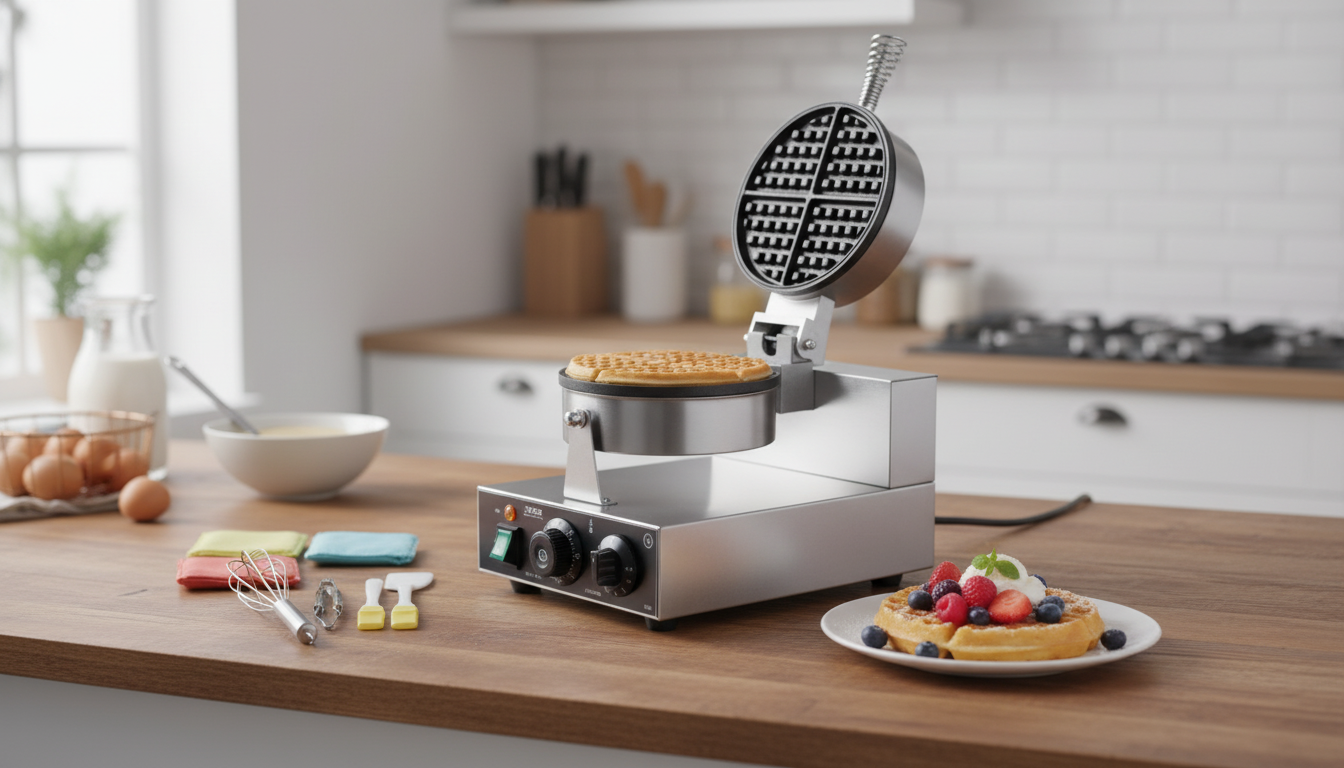
Commercial Belgian Waffle Maker 1230W – Round Stainless Steel Waffle Iron
A round, stainless steel waffle iron built for fast, repeatable batches can make the difference between a smooth breakfast rush and a bottleneck. This guide breaks down what to look for in a commercial Belgian waffle maker—power, heat control, build quality, workflow, and cleaning—then maps those needs to the Commercial Belgian Waffle Maker 1230W – Round Stainless Steel Waffle Iron for cafes, food trucks, catering, and high-demand home kitchens.
What this waffle maker is designed to do
- Produce thick, Belgian-style round waffles with consistent browning when properly preheated and portioned.
- Support frequent back-to-back cooking cycles thanks to commercial-style power and heat retention.
- Fit small-service setups (countertop stations, pop-ups, food trucks) where speed and reliability matter.
- Offer a stainless steel exterior that suits front-of-house visibility and frequent wipe-downs.
The round format is especially useful for standardized plating: waffles land neatly on common round plates and clamshell containers, which helps keep service moving when tickets stack up. Pair that with a predictable cook rhythm and you can train staff (or family helpers at home) to hit the same result, waffle after waffle.
Core specs and build highlights
- Power: 1230W class output aimed at faster recovery between waffles compared with low-wattage home units.
- Form factor: round plate design to match classic Belgian round servings and standardized plating.
- Exterior material: stainless steel body for durability and easier cleaning in commercial environments.
- Counter footprint considerations: plan space for lid swing, ventilation clearance, and a safe resting zone for hot tools.
- Service readiness: prioritize stable feet, solid hinge feel, and a latch/handle that stays cool enough for quick turns.
| Item | Why it matters | What to confirm |
|---|---|---|
| Electrical | Prevents tripped breakers and slow warm-up | Dedicated outlet when possible; outlet matches plug and local voltage |
| Ventilation | Reduces overheating and improves consistency | Open air space around the unit; avoid cramped shelves |
| Heat-safe station | Improves workflow and safety | Heat-resistant mat; tongs and timer within reach |
| Batter workflow | Faster service and fewer spills | Portion scoop or dispenser; drip tray or towel nearby |
| Cleaning routine | Keeps plates performing and extends lifespan | Soft brush/cloth ready; no abrasive pads; cooldown plan |
If you’re outfitting a breakfast corner at home (or creating a customer-facing brunch moment in a cafe), comfort and layout matter too. For seating and flow ideas that pair well with a waffle station, see The Cozy Corner That Changes Mornings: Ultimate Breakfast Nook with Banquette Seating Guide.
Heat performance and waffle consistency
- Preheat routine: allow full heat soak so the first waffle matches later batches in color and crispness.
- Recovery time: higher wattage helps maintain plate temperature when cooking continuously.
- Browning control: aim for repeatable settings by pairing temperature control with a timer and consistent batter weight.
- Steam management: thick Belgian waffles release moisture; brief rest on a rack helps preserve crisp edges.
- Batch rhythm: establish a cadence (pour → close → time → release → quick wipe) to reduce variation during rush periods.
The biggest “quality leap” usually comes from removing guesswork. Use one ladle size (or a batter dispenser), one timer setting, and one rest method. When the plates are properly preheated, the waffle should release more cleanly, brown more evenly, and maintain its texture longer once plated.
Workflow for cafes, catering, and food trucks
- Station layout: place batter to the left/right of the hinge side to avoid reaching over hot surfaces.
- Portion control: use a measured ladle or dispenser to minimize overflow and reduce cleanup time.
- Release strategy: let waffles set briefly before opening; use silicone or wooden tools to avoid scraping surfaces.
- Holding and serving: hold finished waffles on a wire rack (not stacked) to prevent sogginess.
- Peak service tip: run a test batch at opening and record the best time/setting combo for staff consistency.
In tight spaces, micro-efficiencies matter. Keep a small “hot-tool zone” for tongs, a heat-safe brush or cloth for quick edge cleanup, and a dedicated landing rack for finished waffles. If your menu includes sauced toppings (fruit compote, chocolate, whipped cream), build the line so the waffle rests briefly first—steam is the enemy of crispness.
Cleaning and care to keep performance steady
Safety and food-service considerations
For sanitation fundamentals in retail food settings, reference the FDA Food Code. For quick refresher guidance on time and temperature control (especially when handling egg-based batters or dairy toppings), the USDA “Danger Zone” overview is a helpful baseline. If you’re outfitting a professional kitchen, it’s also worth understanding what equipment certifications indicate; see NSF’s explanation of certification for context.
Who this round stainless steel waffle iron suits best
If your service is steady rather than massive—think weekend brunch waves, catered stations, or a food truck with a tight menu—the Commercial Belgian Waffle Maker 1230W – Round Stainless Steel Waffle Iron is built around the traits that matter most: fast recovery, durable exterior, and a format that plates cleanly.
FAQ
How long should a commercial Belgian waffle iron preheat before the first waffle?
Preheat until the ready indicator shows it’s up to temperature, then give it an extra 1–2 minutes to fully heat-soak the plates. For consistent service, cook one test waffle at opening and lock in the best time/setting for the day.
Why are my waffles sticking even when the iron is hot?
Common causes include not fully preheating, opening the lid too early, low-fat/low-sugar batter, or residue buildup from prior batches. Gently clean the plates and edges, portion consistently, and avoid abrasive tools that can worsen sticking over time.
What’s the best way to keep waffles crisp for service?
Place finished waffles on a wire rack so steam can escape, and avoid stacking them. Serve promptly, and let waffles rest briefly before adding toppings to help preserve crisp edges.











Leave a comment